The feeling does not present itself immediately. No, it works in a different manner; it manifests itself gradually, from a few morsels of disgruntlement into a full-fledged main dish of a sensation. It’s usually accompanied by a healthy dose of denial too, one which makes it very difficult to actually realize what it is that you’re feeling. You feel sad, about something someone does, and you find that you were expecting more of them. Expecting them to do something that, for all intents and purposes, you thought they were capable of doing. So you feel sad for a while, and then you move on. Then it happens again, and the sadness re-emerges, perhaps this time with a nice little side-dish of anger. But then it fades away. The cycle repeats, again and again, until at some arbitrary point, you realize that you’re not feeling any of those things, but in fact you’re feeling something deeper and much more unfortunate. You’re disappointed in them, and — even worse — in yourself for having been led down that merry path of sadness and unfulfillment. That really is the worst thing about it, right? That you felt the desire to lie to yourself, and you knew you were, but you just kept on doing it, because the alternative felt so much worse. We resist disappointment with such vehemence because we don’t want to let go of the hope that there could be more. We resist it because otherwise we have to accept that people are fallible, that they won’t live up to our expectations, that they won’t always keep their promises. We resist it because it introduces an element of uncertainty into one’s mind; you always have to temper your future expectations with the possibility of them not being met, for fear of being disappointed yet again.
A Matter Of Perspective
Break-ups suck. It’s a universal truth that everyone accepts as gospel at this point. It doesn’t matter if it was painless, if you and your ex are still on speaking terms and are very friendly with one another (please note that there’s probably around three people in your life who mutter a ‘fuck you’ internally whenever you relate that fact to them) – regardless of the circumstances, the actual act of ending a relationship is not a fun process; the shearing of that particular sort of connection, the realignment of your thoughts towards a person, the loss of the closeness and intimacy you might have acquired during your time together.. it’s something that takes time for a person to process and get through, and even then, you’re not entirely in the clear. Some of that stuff stays with you for years. Maybe forever.
Sounds like a lot of fun, no? Kind of makes you wonder why we put ourselves through that whole ringer, over and over. Something about the fact that the waves of our hopes and dreams just keep crashing against the rocks of that particular inaccessible island seems a little…unwise, perhaps.
But what can we really do? I mean, of course there are people among us for whom the idea of perpetual singledom is something they wholeheartedly welcome and enjoy (and believe me, I’ve tried my hand at that so many times. It’s hard. The people who manage to do this are wizards, in my opinion) but beyond the adjustment of perspective that allows one to appreciate the times when you’re single, alone and by yourself, the deeply natural desire of wanting to be around someone and to share parts of your life with them remains a strong, almost pulsating thing in the back of one’s mind that pushes you to keep trying to satisfy it. It sounds a little insidious when I paint it that way, but come on, how many times have you cursed yourself for being back in that same loop where you keep waiting for a text that takes a little too long to come along, only to feel entirely dumb when it does and you realize that your crush was just talking on the goddamn phone. It’s deeply silly and entirely human (perhaps the reason it’s silly IS that it’s human, honestly).
So we can probably agree that we’ll keep trying (or hoping) to meet that special person someday, and that we’ll go through a breakup (or a dozen) in our attempt to do so, and that it’ll hurt like a motherfucker almost every time. Right? Well, not to get all relationship advice-y on you – and that ship might have sailed already – but I’ve found that there’s something that helps me look back at these experiences with a feeling that’s not just a mixture of sadness and bitterness.
Fact is, regardless of how things ended, the experiences you went through changed your life in some way. That’s usually what I stop to investigate for a little while, and the things I discover often do astound me. Sure, sometimes the impact is minimal, but it’s balanced out by the times when someone allows you to change your whole outlook on what you want out of a relationship, and what you’re able to compromise on vs what’s gonna be a hard pass for you. But even beyond that, sometimes I think of what I’ve learned from prior exes, or the small ways they’ve enriched my life, and it’s often a thing that makes me smile. Yes, they may no longer be with you, but there’s a part of you that’s forever changed because of them – and hopefully that’s a thought that introduces a bit of gentle warmth into your heart.
For fun, let’s see some of the ways things have changed for me. My first long-term relationship left me with a deep appreciation for better kinds of tea (seriously, how I managed to just drink Lipton for almost 26 years at that point is beyond me), and introduced me to the marvels of sriracha, a thing I never knew existed but cannot live without at this point. Others have allowed me to question my place in the world, and what I want for myself. They made me think about international politics, and how deeply I ought to engage with that in comparison to more local affairs. They made me work a little harder, study a little more, just to live up to their example. They’ve made me care about good design, and introduced me to so…much…music that I’d have never found on my own (this comes with the caveat that sometimes that music reminds me of them, but..you know). And, on a slighter but hardly more minor level, they allowed me to finally get around to watching shows that I should’ve been checking out many years ago.
So it’s not really an exaggeration to say that those people have been instrumental in making me who I am today, and while there are aspects of me that I’d like to change, there remain parts I like a lot that can be traced directly to the influence of those people. I couldn’t be grateful enough for the time they spent in my life, and I can only hope that they could one day look at me with equal kindness. I hope we all can.
Anyway, give it a go sometime, yeah? I promise, you won’t be disappointed.
Be Good
What is it that we desire to see in ourselves, years after all the effort we exert to become better people, or at least, people more well aware of their shortcomings, and thus more capable of navigating them with minimal damage to those around them? Do we look at our parents and think, this is where they went wrong, and I’ll never be like them, but we only end up being faulty people in other ways that we’ve failed to anticipate? or do we look at those who we think are better, and somehow try to discern their road to improvement, only to find ourselves on a different road entirely? Who can truly tell? It does seem like there’s no one way, or some others may say that there’s no road at all.
Is it that life has never been easy, or is it that we make life more difficult for ourselves? The answer probably is that there’s an element of truth to each of those ideas. Every day a new door to awareness opens, and with it questions and anxieties that come cascading down the waterfall of our thoughts, and with age the boulders just become bigger and much less avoidable. But I also reject the idea that being a good person is somehow a challenge, or an exercise in difficulty, I refuse to think that decency is some sort of test that most people fail somehow.
People love to point to the concept that if there was no oversight, everyone would revel in mischief, and those who wouldn’t would become sheep amongst wolves, destined for consumption. And perhaps examples in everyday life do corroborate that idea; witnessing corruption take over entire establishments and countries, and people following suit. How can you not think that we are inherently awful?
But I would say that said awfulness is not inherent, but indeed learned through years of cruelty and laissez-faire attitudes that warp people’s minds into thinking that it is an eat-or-be-eaten world out there. It is not difficult to be decent, but it is equally easy to teach a child that taking things by force is the only right road, that women are inferior, that you always have the right of way, regardless of what you’re doing. When you live in a cruel uncaring world, reflecting that cruelty back at the world becomes a means of survival, without any consideration of what lies beyond that cruelty. Had there been an inkling of a desire for introspection, I do not doubt that one might realize that they wish to be decent, or at least not as cruel as the world made them to be. They just never get to choose.
Choice is indeed a luxury, and maybe what we ought to do is try to give everyone the choice we possess. What comes out of that might be a surprise, to us and — more importantly — to them.
Browsing History
The memory seems to be seared into my mind for some reason. It was back in 2010, and I was working on my master’s in Saudi Arabia. Those two years were some of the loneliest in my life; I was living by myself for the very first time, and I had not managed to grow out of my extremely introverted shell – one wonders if I ever did, to be honest – at the time. So, while other students hung out in lounges and cafes and did nothing of consequence, I sat at home on my couch, watching TV and talking to people online. At the time, my platform of choice – aside from the then ever-present and entirely chaotic Twitter – was one of those chat websites. You know the type; chat rooms, organized by interest, full of anonymous people saying the most random things. I’d been on similar websites before, during my undergraduate years, but I’d stopped for some reason. At that point though, Twitter had grown into a familiar thing, a link to the friends and people back home, and I needed something different. So there I was, jumping back into those sparse windows filled with unfettered thoughts. I won’t pretend that it wasn’t utterly disgusting at times; I mean, I know that, and you probably do as well. That’s just the nature of the beast. But, joining the room dedicated towards those in their early twenties, there was definitely an element of shared disillusionment that brought everyone together, as people talked about their days, their struggles with school or with their partners, and of course, flirted endlessly with one another.
But I’m getting sidetracked here; during those chats, you could choose to send a private message to someone, if you wanted to talk to them in a less chaotic environment. (and yes, of course A/S/L messages were ubiquitous at the time). I don’t recall how it exactly happened, but I remember starting to talk to this girl who was older than I was at the time. I think she was perhaps 26 or 27, and I was entirely taken by her. In an environment that lent itself to usage of shorthand and internet speak, someone who wrote full sentences and used punctuation was someone you noticed, you know? And this girl could write. She wove those incredible stories about her life, about the people she knew, and the experiences she had, the countries she’d visited, the music she wrote, and you couldn’t help but get swept up in it all. I mean, for someone to want to tell you all these things, it was something I just appreciated immensely. It didn’t even come to mind that she could be making all of those things up. She could’ve even been a guy who was having some fun at my expense, but none of those thoughts came to me. It just seemed so entirely unlikely that someone was taking all of this time to let you know about them, and even more incredibly, learn more about you and provide their opinion and thoughts on the struggles you were going through. It would be a massive waste of time, not to mention impossibly boring, to troll someone through listening to him complain about family troubles, or how he was struggling with his studies.
Anyway, of course I fell for her; a pretty girl who seemed so worldly and yet so interested in what I had to say? I stood no chance whatsoever. Even more strangely, she seemed to be into me too, expressing her feelings in a very honest and open manner that would take years for me to experience again from anyone else. We talked for hours, thinking about the ways we could possibly meet up, and the places we’d go and the things we would do. I knew it was all very silly, but…come on, I was a lovesick 22 year old. I was invested.
Then one day, of course, she just vanished. Offline on MSN Messenger. Offline in that chat room. I’d gotten used to finding her online every day, so the sudden disappearance was immediately worrisome. Unfortunately, I had no one to reach out to in order to know more; she didn’t talk much to other people in that chat room, we had no common friends, and all I had to go with was a first name. Google would’ve laughed at me if it could. Initially I thought it was something I’d done or said, so I kept looking back at our last messages, trying to find an angle from which my words would’ve seemed offensive, but my efforts utterly failed. And after a week or so of frantically logging into those online services at various hours of the day, I was convinced that she was gone forever.
I usually forget about this girl for months or even years on end, but sometimes when I’m just sitting, I recall that there was this very brief period of time when this very peculiar stranger just appeared in my life, and promptly disappeared shortly afterwards, without a trace. And every time, I wonder what she could be doing right now. I wonder if something had happened, or if she’d just had to move on with her life. Maybe she moved out and lost her internet connection for a while. Maybe she met someone and forgot about all that nonsense.
Or maybe she never existed, someone’s bored pastime that had turned boring in its own right.
But whatever it might be, I hope that she – in whatever form she might truly take – is okay.
Authority
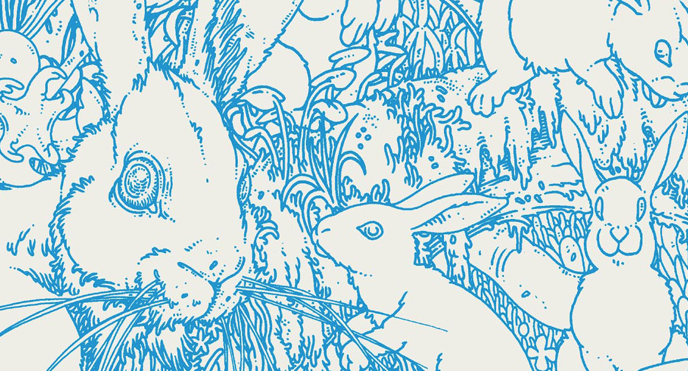
There is a scene in Authority where scores of white rabbits are herded by handlers in hazmat suits towards a shifting, scintillating barrier in the middle of the wilderness. However, the moment some rabbits get through, the others emit piercing shrieks of horror and turn in abject panic to their handlers, biting and scratching in an attempt to get away from whatever lies beyond the barrier.
It is not, by far, the strangest or most haunting event in that book.
Authority is the second book in The Southern Reach trilogy. It largely documents the attempts of the protagonist, John Rodriguez – or Control as he prefers to be called in the book – to lead the organization in the wake of the events happening in the first book. This particular trilogy is a very strange beast; each book has a very different focus to it, yet they’re all connected by very strong thematic and emotional threads that make you feel like you’re just reading a big, interconnected book. It’s one of Jeff Vandermeer’s greatest achievements as a writer, I believe.
The first book, Annihilation, is a very surreal journey of its protagonist, the biologist, through the haunted wilderness of Area X, and is told in a manner that makes that believable. Descriptions of the wild, of the animals roaming through the area, the plants she comes across. It’s what someone like her would see in that place. However, Authority trades that surrealism for a different kind of weirdness: the strange, eerie quality that often occupies governmental organizations, making them feel otherworldly, belonging to a different sort of reality, and Jeff Vandermeer definitely nails that sort of feeling. It is a marriage of the stolid boredom of government bureaucracy and the unknowable quality of Area X, and it works beautifully.
Authority is also suffused with a massive amount of paranoia, with the Southern Reach being a secret organization tasked with understanding Area X, a place that seems to defy all understanding. No one is ever able to know how it came about to be, or what it purpose is, and even worse, everyone working in the organization seems to have an ulterior motive or reason that drives them, unbeknownst to their coworkers. Sedimentary layers of secrecy obscure any semblance of fact, and in the center of this, lies the disgraced spy Control, trying to make sense of it, a futile attempt to tell friend from foe. The paranoia also extends from the parallels between the boring government life and the paranormal, where the novel often posits that the weird actions of a Southern Reach employee could be due to them having done that job for so long that it’s gained an automatic, detached quality to it. Or it could be due to a paranormal contamination beyond the understanding of anyone working there. You can’t ever know.
The thing that reinforces that feeling is the complexity of the characters being presented in Authority. Vandermeer manages to imbue each of them with a unique personality that doesn’t feel rote yet remains relatable in a manner that allows the reader to create a personal baseline for their actions. Said baseline is what allows for moments that jar the reader, when characters act in a manner that veers wildly off their baseline, or in a way that indicates that what one construed as a baseline was merely a facade above a staggering descent. Control, being the protagonist, gets the lion’s share of said characterization, as the reader spends a great deal of time learning about his upbringing, early career and his thoughts and feelings about various events that peppered his life thus far. So by the end, one’s there alongside him, every step of the way along the winding road of Authority‘s mystery.
And mystery is something that Vandermeer is definitely a master of, especially when it comes to the build-up. It is easy, when given the chance to present a world of weirdness, to just go all out on that aspect, and constantly expose the audience to elements of surrealism that bombard them so regularly, just to drive home the fact that this is something different. However, this often runs the risk of having the adverse effect, with each bombardment lessening the influence of the weirdness, until it’s just not weird anymore. However, in these novels, the feelings of unease are presented subtly; they exist beneath the words, present but untold, for you to guess at if you’re looking carefully. And even when you’re looking, even if you can tell that there’s something wrong, you’re still unable to tell what the magnitude of that wrongness is. A few waves here, a bubble or two there, but the breadth of the leviathan that lies beneath the glassy surface of the world remains hidden. Until Vandermeer decides, in the horrifying climax of Authority, to allow it to extend a tendril into our world, just to show the reader that their assumptions about Area X are laughably limited. In a world where we use the word Lovecraftian to represent a certain type of otherworldly unknowable horror, I feel like the word is too limited to encompass the expanse of what the Southern Reach trilogy presents.

There are many ways to interpret Authority, and by extension the whole trilogy, with its intertwining of the beautiful and the terrible in Area X, the allegories of nature’s revenge levied against humanity’s foolishness and folly, and even the meanings we ascribe to words and descriptors, and how such meanings shape our experiences and understanding of people. It is that multitudinous interpretation that makes these books truly special, its shifting variables to be revisited and thought of, over and over again.
29.875
As far back as I remember, there used to be this silly thing that I was accustomed to doing when I was feeling particularly sad. I would think to myself, ‘if I disappeared, or had never existed, would the lives of those around me be any different?’ The answer invariably was a resounding no. Maybe my parents would experience a different sort of life, but I was incapable of seeing how my presence had in any way impacted the lives of friends and acquaintances that I had known at the time.
I know, pretty dark stuff for a kid, but for some reason, it’s where my mind often went. I’ve always been prone to loneliness; a sentiment that could be triggered by the smallest of reasons. Being ignored by friends at school, a weekend spent not talking to anyone, a girl I liked showing no interest in me; the list was endless. Sometimes it didn’t even need a reason to arise, I’d just be sitting there, and it would hit me, a tidal wave of solitude that drenches me in sadness. I would get over it, of course. I always did. But eventually it just became a part of who I am.
—
I turn thirty in a couple of months, and despite my many attempts to not think of it as anything but another number, the expectations associated with the mere adjustment of the tens digit in a tiny number loom rather large. I can already see several of my friends reading this and rolling their eyes in exasperation. Oh, you have no idea how wrong you are, I can hear them say, and I completely agree; I look at people making a big deal of turning 20 or 25, and I chuckle in the same knowing way. It’s just hard to see it from someone else’s perspective, I get it, it’s fine.
But the fact is, I’m turning thirty, and I’ve never felt lonelier in my life. It’s a hard thing to admit, because you think that during all those years, you’d have accrued a certain amount of connections that would make you feel part of something. So when you feel lonely, it comes associated with a feeling of failure, because you haven’t managed to cultivate those connections, and here you are, at a point where it feels too late, too hopeless to try to change that.
There are friends who will read the aforementioned and feel upset or hurt. I would hope that they wouldn’t feel that way, because they know that I do care about them a great deal and appreciate them immensely. And I know they care too. But, life’s funny like that; my group of close friends are now each in a different country, or caught up in the many obligations that come with being married with kids. I don’t begrudge them any of that; it’s just the way things go, that’s just life, etc. But I also won’t deny that it feels rather terrible to think about it and feel like you’ve made a mistake somewhere along the way, and here you are on your own. When you go days or weeks without anyone checking up on you, it’s hard not to feel a little sad.
I’ve felt some version of this for a year or two now, but it seems like the rapidly approaching three-oh wanted to kick the feeling into high gear. Egypt is doing its damndest to seem like the worst place to be, and one’s attempts at living in denial keep gradually getting eroded in the face of daily disappointments. Every month brings with it another friend packing their bags and shuffling off to seek something different. And you just find yourself wondering, what am I doing? Is it the right thing? Am I just wasting my time here? What do I want? Would leaving bring me happiness, or would I just go experience loneliness in a new place? you start feeling resentful, and then you feel guilty about feeling that way. The thoughts just keep swirling in your mind, without a clear answer, and the possibility of entering a new decade of your life without that clear answer brings with it yet another feeling of failure. The failure of loneliness, and the failure of ennui, mixed up with a not insignificant amount of anxiety, tangle together into a rubberband ball of very bad feelings that don’t go away.
Perhaps you’ll look at this and think it’s a problem of perspective. But when you’re feeling lonely, and the future is unclear, and you think you shouldn’t be feeling that way when you’re turning thirty, the lens through which you see life gets rather distorted, and things get rough. Even the things that you usually manage to say to others to help them through their own rough spots ring hollow in your ears, because your brain tells you it’s all bullshit, and you’re just trying to lie your way out of it. Gonna have to try harder than that, buddy. I know all the tricks.
I struggled a lot with saying all these things. It sounds incredibly whiny, I thought. Your pride gets in the way, because you don’t want to seem so vulnerable and weak. Nobody wants others to think they’re feeling purposeless and lost. But, what the hell, I said, if I’m feeling a certain way, I’ll just say it. I can’t both feel the lack of human connection and deny myself the right to express it. That’s just too cruel, and there’s enough cruelty in the world without inflicting it upon ourselves.
—
By some sheer coincidence, I found myself going through a fair bit of media lately that deals with loneliness. Be it reading Bluets by Maggie Nelson and seeing her experience loneliness through the lens of her fascination with the color blue, or listening to Moses Sumney’s Aromanticism (which I’m listening to as I write this actually) and experiencing the various struggles that come with accepting loneliness and living with it.
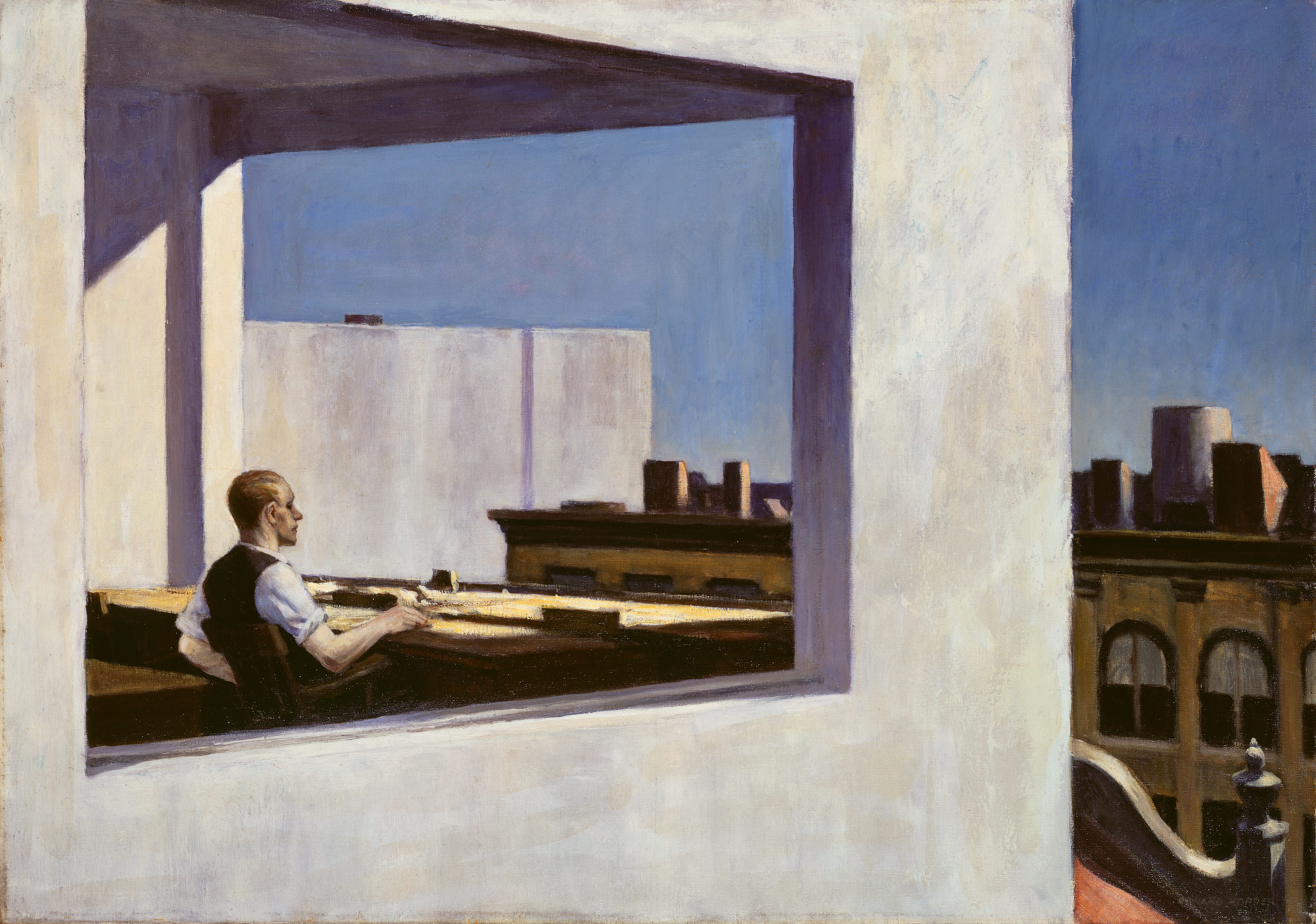
But perhaps the most affective of them has been The Lonely City by Olivia Laing, a book that I haven’t even finished yet, but which has already managed to leave its indelible mark upon me. In it, Laing talks about her own feelings of loneliness when she uprooted her life in England and moved to New York for a lover who ended up having second thoughts, and then she utilizes those feelings as a jumping off point to talk about various artists such as Edward Hopper and Andy Warhol, and how their loneliness made itself apparent in their lives and works of art.
And for me, there is a note of hope there; sure, perhaps loneliness isn’t something that’ll eventually go away. Maybe it is, as I said in the beginning, has become part of who I am. But perhaps that’s not all bad. Maybe you learn to get through the tough parts of it, and maybe it helps you gain a deeper knowledge of yourself and thus express yourself better. Maybe you manage to establish some sort of working arrangement, an understanding of sorts. Maybe, in time, it stops being such a fucking drag.
Maybe.
The Grey Language of Love
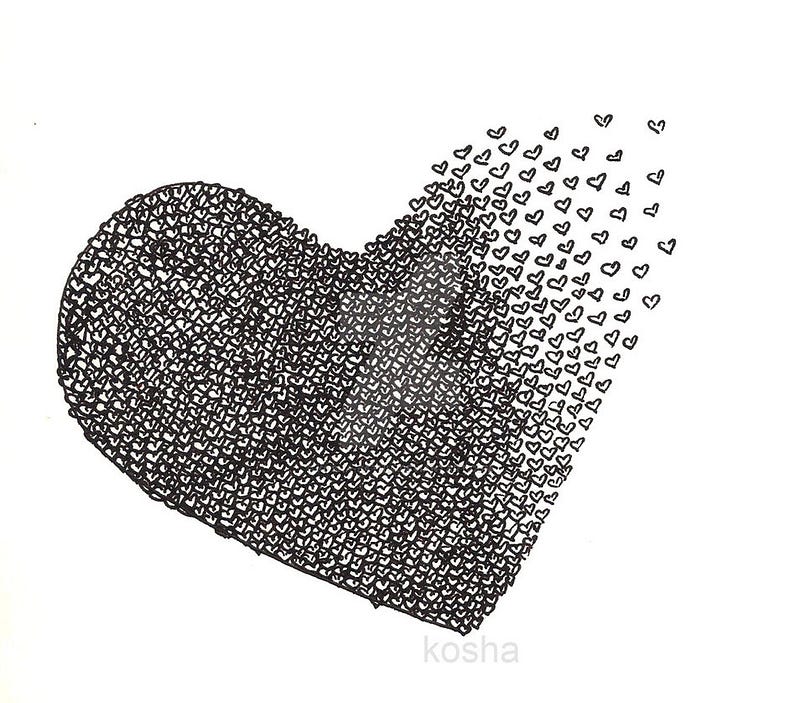
Not too long ago, I used to write these little poems; words of endearment towards a loved one which I hoped would brighten their day. But now I go back to those poems, and I feel like the words are devoid of any meaning whatsoever.
Now, you might roll your eyes at this, thinking ‘Well, of course. That relationship is over. Why would the words still hold meaning?’ And perhaps that is part of the reason. But the larger, less explored issue here is how the language of love has become overused to the point of meaninglessness.
You know how, if you say a word too many times, it starts losing its meaning and you start thinking it just sounds funny? I feel like this is the case now with such proclamations of affection. Think about it; all those phrases and metaphors and grand statements. Waxing poetic on how someone’s face is sculpted like an ancient goddess, or how their eyes catch the light of the sunset, or how their rippling hair seems to remind you of the endless ocean. These all sound nice, but are they really reflective of the love you feel? Or are they just words, bound to be repeated over and over as time goes by?
Mind you, I do not say that those who use it do not mean it. On the contrary, I feel like it’s not easy to come by these words, and so they’re probably being truthful. However, I personally feel like I’ve lost interest in them. You can come up with some colossal proclamation of love, something that belongs in a romance novel for the ages, and I would still feel like it fails to capture the essence of it all.
But why is that the case?
Perhaps it’s become too impersonal, this vocabulary of love we utilize. All these words we share with loved ones, the words we hear in songs and movies and shows every single day. They’ve all become faded, overused and in need of retiring, if only for the sole purpose of giving them meaning again. Otherwise, one day you’ll be told you’re someone’s shining star, and all you’ll manage is a shrug.
‘Sure, like I haven’t heard that before. Boring.’
For me at least, it seems like I’m infinitely more interested in the love we allude to, rather than that we proclaim. The minute details of someone’s life and actions, which reflect the feelings they have for someone else. Beyond any accusations of faking emotion or words, there is a present, unique value to these details that is richer — if not more ornate — than any word I can think of.
So perhaps the next time I write a poem, I’ll think less about the words being written, and more about what the action of writing itself indicates. Maybe then I’ll feel better about it.
Oculus

There was a moment, during my recent corrective surgery, where the doctor attempted to gently open a flap that was created using a pretty precise. laser. Problem with that is the fact that the flap is rather tiny, and often fibers from within the eye itself are not completely sliced. So the doctor has to use a set of pliers to gently pull and nudge at the flap, until those fibers yield and the incision is clear.
It was days later that it occurred to me how you and I seem to have followed a similar trajectory.
I honestly do not know how it happened. But something got in there pretty fast, and a bond that ties us together seemed to have been cut altogether. I played it back in my mind a thousand times, to make sure I hadn’t missed anything. But no, it was all just fine.
Until it wasn’t.
And if I thought that was confusing, then I cannot begin to express how I felt when, over the following days, I watched as something invisible tugged at the torn flap in our relationship, while strands of tissue awkwardly stretched and then gave way in resignation. It was in our interactions, in the way we avoided looking at one another, in the stunted conversations and the too-long pauses that seemed to punctuate every attempt to work against that indelible force.
But it just felt like an inevitability after a while. I realized that I was starting to treat it like it was the new norm; I was leaning into the gusts of dissolution, letting them drive me away from you. I knew that I was probably coming across like a total ass, but it seemed like you too had accepted the new status quo, and we were just merely engaging in the necessary dance of separation.
If I were to attempt to describe how it felt, and still feels sometimes — whenever I let it, that is, I’d say that my brain catches fire; it blazes with too many thoughts and questions and emotions that I end up just shutting it all down. I do so because, I know that if I were to let it go on, it would just burn endlessly, seeking an answer that simply doesn’t exist. Who knows why these things end? Sometimes there’s a clear instigating incident, other times it’s a slow vague spiral into a grey nothingness. It’s not even thrilling, the way violent endings are.
Perhaps that’s the thing that saddens me the most; the apathy in which we seem to have both drowned in.
— — -
After the flap is successfully shorn aside, the doctor utilizes the laser to make the necessary corrective changes, and then methodically realign the flap against the cornea, giving it the chance to naturally heal. A part of me, a not-so-small part, wishes the analogy would carry through to this conclusion instead. I’m hoping this tear allows for a reunion in the future, one that houses a healthier, stronger core, that gives us the gift of a sharper image of what is to come.
Ma
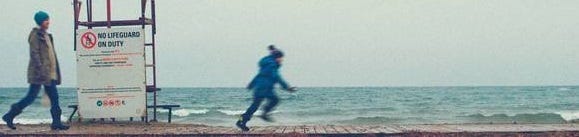
Some time ago, my mother asked me whether I remembered much from my childhood. I told her that I don’t remember much — it having happened more than 20 years ago, but that I do recall many of our arguments and fights, over almost anything.
As you can tell, the relationship my mother and I have isn’t perfect. Or you could say that it’s as perfect as these relationships go. That is to say, it’s not. My dad spent most of my childhood working abroad, trying to make ends meet so they can afford to send me to this school and buy me those things I wanted. So it was mostly my mom and I, during these few formative years of my life.
Around the age of twenty two or so, I found myself taking a good hard look at myself, and I saw that there was much I needed to work on. I was too sheltered, having been exposed to life mostly through the lens of what was acceptable to my parents at the time. I graduated from university with top degrees, but with very few friends or life experience. I did the things I was told to do, even when I wanted to do something else, because I believed that they knew better. Theirs was the right opinion, regardless of how I felt about it.
I was filled with resentment, towards myself — and yes, towards my mother for having led me down that path. It didn’t help that when she would chastise me for behaving in a closed-off manner, I’d just say that it was all because of the way they brought me up. “You hate the fact that I’m embarrassed to talk to people? That I avoid these experiences? Well, you were the one who always took the lead and never trusted me with any decision. What did you think was gonna happen?”
I was a colossal shithead, obviously.
In the years since then, and as I’ve grown and taken on more responsibilities of my own, I’ve realized how I had it all wrong. We lead a sizable portion of our lives seeing parents as this infallible image; they are the ones who do everything, who make decisions, who direct our lives for many years. So when they make mistakes, it messes with us. How can they screw up? They did this to us. But what we fail to realize, at least when we’re younger, is that parents are just people. It’s as new to them as it is to us, and they’re terrified of every decision they make, because they can see the repercussions. So they just do their best, and try as hard as possible to do the right thing, but they have no way of telling how it’ll turn out, because — goddammit, it’s all uncharted territory. Everything they do, they do out of love. It might backfire, it might be misguided, but when you’re looking back at it, you have to see it through their lens. Not just yours.
So, I grew up to be reclusive, shy and often non-confrontational. So what? They’re things I can work on. I also grew up to be a kind, gentle, understanding and respectful person. I grew up to be a hard-worker and to appreciate learning in all its forms. I grew up to be a feminist, to support all those who suffer under the weight of an unfair world. All those things I can trace back to my upbringing, to the way my mom (and dad, of course) brought me up. I picked some of it up on my own, sure, but at the core of it, there’s what they taught me. And I have to appreciate that. I cherish it, and her, every day.
—
Through sheer coincidence, I ended up watching the movie Room last night. The movie deals with a mother and her child, who are made to live in a small shed for seven years, and how they try to cope with the outside world once they emerge. Brie Larson, playing the mother, shows this mixture of strength and vulnerability that felt so familiar to me. She tries to do what’s best for her child, but she makes mistakes, because she’s not perfect.
Near the end, in a quiet moment, she talks to her son with tears going silently down her cheeks,
I’m not a good enough Ma.
The son pauses for a moment, giving this imperceptible nod, and answers
But you’re Ma.
And that’s all there is to it; she’s Ma, with all that entails.
Happy mother’s day, Ma. I love you.
Twenty-Something In Egypt
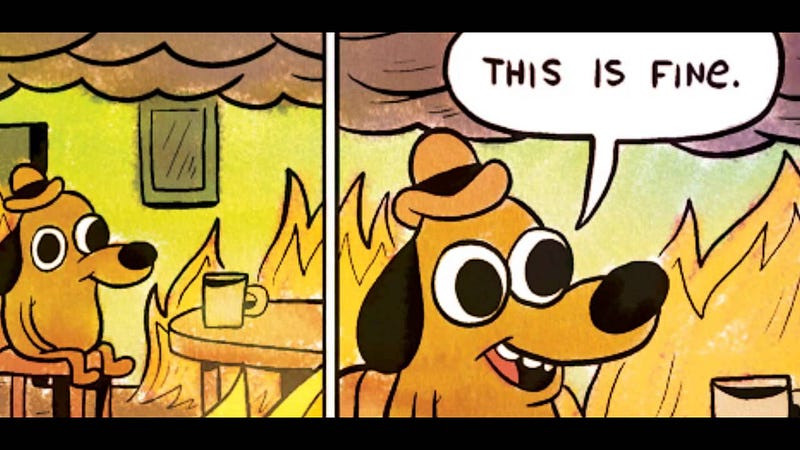
Turning 28 in a few days, I find myself thinking a lot about how it feels to be someone in their late twenties living here in Egypt. Now, I consider myself to be pretty average: born to an upper-middle class family, acceptably-educated, moderately aware of history by way of information filtered through a state apparatus keen on maintaining a certain image. In short, there are millions of people like me out there at the moment, making their way to work, cursing the traffic, wondering what bad news the day might bring.
And that’s the sad thing about it, no? Life in Egypt right now has become this game of expectation; you wake up in the morning not knowing what will happen, but there’s always this sense of trepidation in the air. Sometimes, you manage to forget about it, you enter your bubble of choice, feeling somewhat guilty, but also justified in doing so. After all, you’ve got your own issues and struggles to deal with. Don’t we all? But still..
I understand of course, that I am talking from a position of privilege here; I make enough money to live comfortably, I possess a car, and — perhaps most incriminatingly — I’m a guy, which means I get to not experience the systemic abuse Egyptian women see on a daily basis.
Your twenties often bring about a lot of things: disillusionment with the status quo, a desire to change your place in the world and a fleeting sense of hope that change is indeed possible. Eventually, one acquires the valuable ability to distinguish between what can and cannot be changed, which brings with it some modicum of inner peace. This might be the case in general, but nowhere is it more pronounced than in one’s twenties here.
I was 23 in 2011 when the revolution happened. Our parents love to throw around the accusation that we’re not patriotic and we don’t love our country, but it’s funny, because I don’t think I’d ever cared about Egypt as much as I did during those brief days of upheaval. Anyway, time went by, things fell apart and we find ourselves 4 years later with a lot more awareness, but also a great deal more hopelessness. I’m not going to sit and think back to some golden days, and say how I think we led a better life back then. Who knows whether it was worth it or not? I honestly don’t, and I don’t even think I have the right to judge, given how little effect all these changes have had on my life.
But, even if your life hasn’t been visibly impacted by these changes, it is impossible to deny that your surroundings have definitely changed. Much has been said about how the psychological profile of Egyptians has been irrevocably changed after the revolution, and it’s no surprise. Take me, for example. I experience a little bit of panic every time I see a small gathering of police somewhere, simply because I know how helpless I’d be if anything were to happen. I could disappear, for no apparent reason, and no one would ever find me again. I worry about aggravating a deranged driver, because I know it’s entirely possible that they’ve got a gun or a knife in their car, and no one would stop them. I worry about my mother, when she walks home from work at night, because I know that I cannot rely on anyone to help her if she’s a victim of harassment or mugging. I worry about falling ill, because I know that the entire medical superstructure in Egypt is corrupt and malpractice is as common as the common cold. I worry about an ailing economy, that is spiraling downwards towards an abyss, while everyone argues about the true meaning of sovereignty and the power of the state.
I worry, and I despair, because I know that there’s very little any of us can do to change these things.
And so this is what our twenties have turned into: a time of supposed experience and learning that has become a great mess of anxieties and fears, that snowballs ever bigger each day, as the bubble of disinterest and denial struggles to keep it outside. But the cracks keep growing, and it’s only getting worse.
Eventually, you find yourself just thinking ‘Well, at least I’m alive,’ and I guess in some sad way, that’s the joke Egypt plays on us every day.
See you next year!
 mazloumest.com